




 Rajasthan, the Royal State of India, is known as the regal home of the great Indian Maharajas who have managed to maintain their traditional splendor. In the heart of the Thar, the chivalrous rulers of Rajasthan are still alive in the various folklores and folk songs that narrate the evergreen legends of their bravery and romance. The glory is well preserved in the people of Rajasthan and in the majestic forts and palaces. Braving the unmerciful desert winds and oppressing heat of the scorching sun, they have stood invincible against many-a-sieges and have provided refuge to the rulers in their time of strife. Now, they have been opened to the tourists who come here to see a wonderful display of their rich heritage and splendid artistic architecture. Many of these forts and palaces retain their old charm and tradition. Some of the royal residences have been now turned into heritage hotels, where the visitors can still experience the magic of India's regal past.
Amber Fort
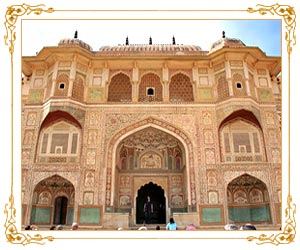
Raja Man Singh built Amer Palace in 16th century. It is a mesmerizing blend of Hindu and Mughal architecture. Rajputs made use of this Amber Fort from the 16th century up to the foundation of Jaipur in 1727.
Chittorgarh Fort
The Chittorgarh Fort has witnessed three bloody sieges and 'jauhars' (a Rajput tradition in which royal maidens and ladies immolate themselves in the fire to save their honor from the cruel hands of the enemy, when there is no chance of defeating the enemy).
Gadsisar Sagar
Gadsisar Tank is situated south of the city walls of Jaisalmer. It was once the main source of water supply to the city and is surrounded by small temples and shrines.
Jaigarh Fort
Not very far from the Amber Fort, Raja Sawai Jai Singh built the Jaigarh Fort (translated as fort of victory) in 1726. This former royal treasury in Jaipur is remarkably well preserved for the military structures of that period and is regarded as one of the three mightiest forts of India.
Jaisalmer Fort
Crowning Trikuta Hills, the majestic fort of Jaisalmer is more than 800 years old. Made of golden yellow sandstone, the fort stands in the heart of the Thar desert, and has witnessed better times of wealth and prosperity when it was an important trade centre and fell on the ancient silk routes.
Jal Mahal
Built to be a pleasure palace for the royal family in 1799, Jal Mahal Palace (translated as Water Palace) of Jaipur is an extremely romantic place with its red sandstone intricate architecture casting beautiful reflections in the calm waters of the Man Sagar Lake, full of hyacinths.
Junagarh Fort
Junagarh Fort of Bikaner was built by Raja Rai Singh, one of the most able and trusted generals of Akbar, in 1587. The fort is surrounded by a high wall and deep moats.
Kumbhalgarh Fort
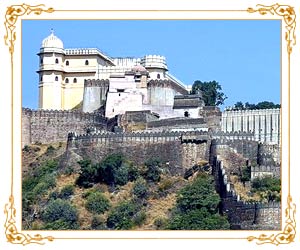
84 km from Udaipur, Maharana Kumbha built Kumbhalgarh Fort in the 15th century. It is the second most important fort in Rajasthan after the Chittaurgarh Fort. Crowning the Aravalli Hills, the fort is not so easily accessible with seven great gates that stand guarding its entrance.
Lalgarh Palace
Oriental fantasy and European comforts are blended together most tastefully in the Lalgarh Palace of Bikaner. Maharaja Ganga Singh built Lalgarh Palace. There are terraced lawns that have been artistically planned and are in forever bloom with Bougainvillea bushes and peacocks that charm almost everybody who witness it.
Mehrangarh Fort
One of the largest forts in India, Mehrangarh Fort holds its place on a steep hill. The number of palaces in its premises are made of sandstone and are excellent examples of stone the highlights of the palace are Moti Mahal or the Pearl Palace, which has a delicately carved stone screen and houses the Sringar Chowki, royal throne of Jodhpur, Umaid Villas that displays Rajput miniature paintings
Nahargarh Fort
Cradled in the Nahargarh Hills, the Nahargarh Fort of Jaipur was built by Sawai Raja Jai Singh in 1734. Jaipur was the capital of Raja Jai Singh II and Nahargarh was a fitting standguard, rightly called the Tiger Fort. It was the first of the three forts built by the rulers of Jaipur.


