





 Rajasthan is rich in architecture and is a delight for all kinds of tourists with its sandy dunes, mighty forts, lush blossoming gardens, shimmering lakes and outstanding monuments. The medieval zeal of honor among the Rajputs rings true in Chittorgarh Fort, men and women alike, while the romantic reverie hovers over the island palaces of Lake Pichola. One can almost see the shy royal ladies chuckling to see the royal procession on the roads of Jaipur, unseen and safe behind the screens of Hawa Mahal. The religious fervor of the staunch devotees at Dargah Sharief at Ajmer and Shrinath ji at Nathdwara is no less than the grandeur of City Palace of Jaipur and astronomical wonders of Jantar Mantar. We present here a list of the top favorite tourist places of Rajasthan that are not worth a miss in this land of wonders:
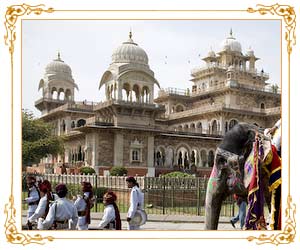
Albert Hall Museum
Positioned amidst the gardens of Ram Niwas Bagh in Jaipur, this museum has an assortment of rare articles on its display including textiles, carpets, paintings, metal and wood crafts, pottery, arms and weapons,
Amer Palace
Raja Man Singh built Amer Palace in 16th century. It is a mesmerizing blend of Hindu and Mughal architecture. Rajputs made use of the Amber Fort from the 16th century up to the foundation of Jaipur in 1727 both for defense purpose as well as the residential purposes.
City Palace
Situated in the capital of Rajasthan, the City Palace of Jaipur or the chief palace is a titillating fusion of conventional Rajasthan and Mughal architecture. The gigantic palace complex engages one seventh of the walled city of Jaipur.
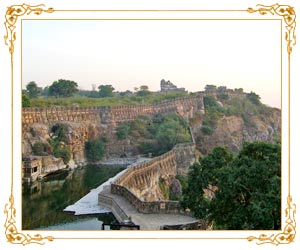 Chittorgarh Fort
The Chittorgarh Fort has witnessed three bloody sieges and 'jauhars' (a Rajput tradition in which royal maidens and ladies immolate themselves in the fire to save their honor from the cruel hands of the enemy, when there is no chance of defeating the enemy).
Dargah Sharif
'Dargah Sharif' or 'Holy Dargah' is one of the most sacred Muslim shrines in the country. Venerated by both Hindus and Muslims, it is the tomb of Khwaja Moin-ud-din Chisti, a Sufi saint who came from Persia and devoted his life to the service and upliftment of the poor and downtrodden.
Fateh Sagar Lake
The pretty Fateh Sagar Lake of Udaipur is located to the north of Lake Pichola was originally built in 1678 by Maharana Jai Singh as a medium-sized perennial storage reservoir. Surrounded by holls on three sides and Pratap Memorial on the fourth, it presents captivating scenery.
Havelis of Jaisalmer
The beautiful sandstone mansions of Jaisalmer's wealthy merchants are known as 'havelis'. Their elaborate homes are a poem etched out in sandstone with infinite details and pains, carved and pieced together in different patterns, and though they are lavish and loud in nature,
Hawa Mahal
Maharaja Sawai Pratap Singh erected Hawa Mahal or the Palace of the Wind in 1799, which eventually became one of the major landmarks of Jaipur. An integral part of the City Palace, it is actually an extension of its women's chambers, and is secluded from the main complex.
Jantar Mantar
In Sanskrit, 'Jantar Mantar' is used for 'Magical Devices' and it is undoubtedly so with the huge masonry instruments, which were placed here to measure 'the harmony of the heavens'. Conceived by Sawai Raja Jai Singh II, it was completed in seven years from 1728 to 1734.
Lake Pichola
Maharaja Udai Singh did not underestimate the panoramic beauty of Lake Pichola surrounded by beautiful hills when he chose to widen it. Later Maharaja Jagjit Singh conceptualized the two beautiful island palaces in the middle of the lake, now, known as Jag Niwas (the much-renowned Lake Palace) and Jag Mandir that adds to the shimmering beauty of the lake.
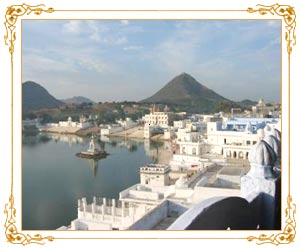
Pushkar
Pushkar is one of the most famous Hindu pilgrimage sites and it is said that a dip in the sacred lake of Pushkar is akin to the visits to the four main Hindu shrines known as 'Chaar Dhaam'. The charming lake of Pushkar is surrounded by hills on three sides and sand dunes on the fourth and presents an ideal site for the religious and cattle fair, which is held every year in the month of October or November.
Sahelion Ki Bari
Saheliyon-ki-Bari or the 'Garden of the Maids of Honor' of Udaipur was once reserved for the royal ladies who came here for a stroll. A well planned garden, with extensive lawns and shady walks situated on the banks of the dainty Fateh Sagar Lake was constructed in 18th century by Maharana Sangram Singh for forty-eight young ladies-in-waiting sent to the royal house, as part of the dowry as a cool summer retreat for them.
Shrinathji Temple
48 km from Udaipur, Shrinathji of Nathdwara is actually a temple of Lord Krishna with his image carved out of a single block of black marble. Set amidst idyllic hills, it is said to be the second richest temple in the world. The royalty of Udaipur pray at the temple and as the head of his clan, the Maharana is also called as Shriji among his people.
Umaid Bhawan Palace
The famine had struck the arid and barren land of Jodhpur and farmers were dying of hunger as their lands yielded nothing and they had no money to buy food. It was then, when like a judicious king, Maharaja Umaid Singh of Jodhpur undertook the construction of this magnificent building as a famine relief project to provide employment and a regular source of income to his subjects.


