



Banganga Fair
It is said that the stream of Banganga was formed when Arjun, one of the Pandavas, shot an arrow to quench the thirst of dying Bhishma Pitamah, who was a brave warrior and had been badly wounded in the battle of Mahabharata.
Chandrabagha Fair
Thousands of devotees gather here at the time of fair to take a holy dip in the sacred waters of river Chandrabhaga.
Gogaji Fair
Gogaji is regarded as a saint by the Kayam Khani Muslims who are beieved to be his descendants. He is an eminent warrior-hero of the region. Hindus called him by the name of Goga Veer while Muslims call him Jahar Peer.
Jambheswar Fair
Jambheswar ji is considered an in carnation of Lord Vishnu himself, by the Bishnois. He always stood for self-control, truth and non-violence. Two temples of Jambheswar ji are situated near the town of Nokha - one in village Mukam and the other on the sand dune of Samarthal.
Kaila Devi Fair
One of the most venerated fairs of Rajasthan, Kaila devi fair is hels at the temple of Kaila Devi, who is worshipped as the guardian deity by the Yadavas, the Khinchis, and the princess of Karauli.
Kapil Muni Fair
The largest fair of Bikaner, Kapil Muni Fair is named after the Kapil who was a great sage, believed to have done 'tapasya' here for the redemption of mankind. Kapil Muni has been mentioned in Puranas and has been said to descend from Lord Brahma (the creator of the world) himself.
Karni Mata Fair
Karni Mata led an ascetic life and dedicated herself to the service of the poor and downtrodden and is believed to possess supernatural powers. She laid the foundation of Deshnok and her main followers are 'Charans'.
Khatu Shyamji Fair
Thousands of devotees visit the temple during this annual fair, many of them for performing the 'Jadula' ceremony of their children, where the child 's head is shaven clean for the first time.
Khetlaji Fair
There are shops and festivity that is characteristic of all Rajasthani fairs. The bubbling people who throng to the fair in their colorful attire certainly add the charms to this gala occasion.
Mallinath Fair
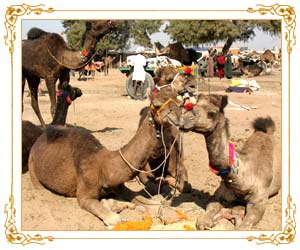
One of the biggest cattle fairs of Rajasthan, Mallinath Fair is just the right place to visit to look out for highly popular breeds of cattle such as cows, camels, sheep, goats and horses.
Nagaur Fair
The famous Nagaur fair is known for the cattle tradesmen with colorful turbans and long mustaches that come there with their fine breed of camels, horses, cows, and bullocks.
Pushkar Fair
One of the most sought-after fair in Rajasthan, a lot of tourists come to Pushkar Fair on pilgrimage as well as to see the display of a mystifying array of items.
Ramdevra Fair
Baba Ramdev was a Tanwar Rajput who took 'Samadhi' (left his mortal body for the heavenly abode) in 1458 AD. He was believed to have miraculous powers and is considered an incarnation of Lord Krishna.
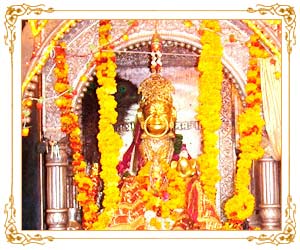
Sheetla Mata Fair
It is said that if the wrath of Sheetla Mata is let loose, then epidemics spread. This fair is held to make offerings and worship the deity to please her and keep her pacified. In the shrine, a red stone represents the deity.
Shri Mahavirji Fair
A sacred place to Digambar Jains, followers of Mahavir ji, they come from far off places to pay their homage to the venerated saint at the Mahavirji temple, situated in an enclosure known as 'Katala'.
Sitabari Fair
As the legend goes, Sita, the wife of Lord Ram, was left by Lakshman here to serve the period of her banishment. He also shot an arrow from where a stream of clear water sprouted for Sita.
Urs Fair
The remains of Sufi saint Khwaja Moin-ud-din Chishti lie buried in 'Dargah Sharif' in Ajmer and are held in held in great reverence by devotees of all communities. Khwaja had come from Persia and established Chishtia order of 'fakirs' in India.
Urs - Galiyakot
Thousands of devotees and followers congregate at the shrine during the annual Urs, to pay their homage and seek blessings of the saint to have their wishes fulfilled.


