



Brij Festival
Marked by the vim and vigor of Holi, the festival of colors, the Brij Festival finds villagers full of zest and vitality. They dress in brightly hued attires and sing songs and dance.
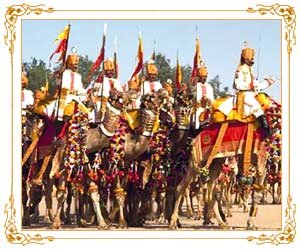
Camel Festival
Organized by the Department of Tourism, Art & Culture of Rajasthan, Camel Festival is held every year in the desert land to attract tourists who love to see long-necked, hunch-backed camels dancing to the tunes and directions of their trainers.
Desert Festival
Desert Festival is the best showcase, one can ever want to view the rich and colorful and rich culture of the desert region of Rajasthan. The major attractions of the festivals are Gair and Fire dancers who wear vibrant and brightly colored costumes as they dance and sing and perform on the regional tunes
Elephant Festival
The Elephant Festival begins with a beautiful procession of bedecked elephants, camels, horses and folk dancers. The owners proudly embellish their elephants with vibrant colors, jhools (saddle cloth) and heavy jewellery.
Ganesh Chaturthi
Ganesh Chaturthi holds a special place in Sawai Madhopur. The Ganesha temple in the fort of Ranthambore, is one of the most eminentGanesha temples of Rajasthan.
Gangaur Festival
Gangaur is celebrated all over Rajasthan. People make images of Isar and Gauri out of clay. Some of them even keep traditional wooden images, which are painted afresh every year by 'matherans' (painters) on the eve of the festival.
Ganesh Chaturthi
Ganesh Chaturthi holds a special place in Sawai Madhopur. The Ganesha temple in the fort of Ranthambore, is one of the most eminentGanesha temples of Rajasthan.
Gangaur Festival
Gangaur is celebrated all over Rajasthan. People make images of Isar and Gauri out of clay. Some of them even keep traditional wooden images, which are painted afresh every year by 'matherans' (painters) on the eve of the festival.
Kajli Teej
Though Teej festival is celebrated all over Rajasthan, Kajli Teej of Bundi has its unique characteristics. The festival starts with the procession of goddess Teej in a decorated palanquin from the picturesque Naval Sagar and includes bedecked elephants, camels, performers, musicians and people in colorful attires.
Kota Dussehra
Dussehra is the beloved festival that is celebrated almost all over India but Dussehra in Kota certainly sets it apart with 75 feet tall effigies of the demons Ravana, Kumbhakarana and Meghnath that are burnt here on Dussehra day.
Marwar Festival
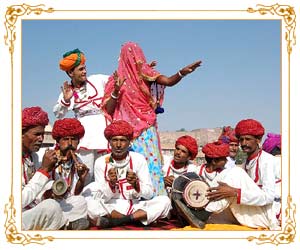
Marwar Festival is held annually in the memory of the heroes of Rajasthan. Formerly known as the 'Maand Festival', Marwar Festival showcases the art and culture of Jodhpur and is devoted totally to songs and dance of the Marwar region.
Mewar Festival
As it coincides with the Gangaur festival, people dressed in colorful attires take out a procession of the images of Isar and Gangaur and the Gangaur Ghat at Lake Pichhola.
Shekhawati Festival
A joint effort of the State Department of Tourism, District administration of Sikar, Jhunjhunu and Churu, and the M.R. Morarka- GDC Rural Research Foundation, Shekhawati Festival has put Shekhawati on the list of rural tourist attraction.
Summer Festival
Mount Abu is known for its precipitous rocks, serene lakes, picturesque locations and lovely climate. The Summer Festival features ballads, Gair, Ghoomar and Daph folk dances, which enchant the spectators with their grace and variety.
Teej Festival
The monsoons are welcome the dry land of Rajasthan with the fragrance of the wet soil and blooming flowers. Teej is said to be the festival of swings, which are hung from the trees and decked with flowers.


